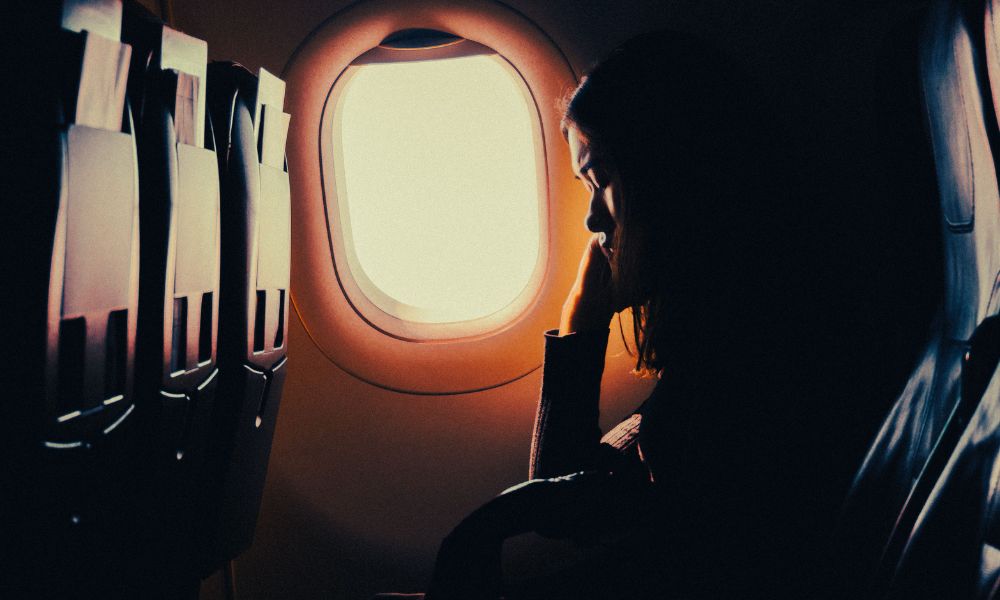
After a summer of holidays, long-haul trips and early-morning flights, many of us will know the feeling: you’re exhausted before you’ve even reached the airport, and the prospect of spending several hours in an aircraft seat doesn’t exactly promise a good night’s sleep.
For some travellers, taking a sleeping tablet before take-off can seem like an obvious solution. But new advice from a pharmacist is prompting a closer look at whether sedatives are really the best way to rest at 35,000 feet.
Sleep on a plane isn’t quite the same as sleep at home
The idea is understandable. Take a tablet, drift off and wake up refreshed at your destination.
The reality can be rather different.
Sedative medicines can cause drowsiness and impaired alertness, and drug-induced sleep isn’t necessarily equivalent to normal, restorative sleep. Taking a sleeping tablet at the wrong time can also make it harder for the body to adjust to a new time zone – potentially leaving travellers feeling groggy rather than refreshed.
And there is another consideration that becomes particularly relevant during a flight: movement.
Why immobility matters
Long periods of sitting already mean passengers are moving much less than they normally would. Sedation may make someone even less likely to get up, stretch or walk around the cabin.
That matters because prolonged immobility during travel is associated with an increased risk of deep vein thrombosis (DVT), particularly in people who already have risk factors.
This doesn’t mean that taking a sleeping tablet automatically causes a blood clot. Rather, it highlights the importance of considering the wider circumstances in which a medicine is being taken.
A sedative that might feel relatively mild in everyday circumstances can have very different practical consequences when someone is confined to an aircraft seat for several hours.
Not everyone faces the same risk
As with many medicines, the potential effects of sedatives depend on the individual.
Older travellers and people with existing health conditions – particularly breathing or circulation problems – may need to take extra care. Conditions such as sleep apnoea can also make sedating medicines a particular consideration.
This is where the conversation around medicines and travel becomes more nuanced. There is no universal answer to whether a particular medicine is appropriate before or during a flight.
What is suitable for one traveller may not be suitable for another, which is why anyone considering taking a prescription or over-the-counter sleep aid for a flight should speak to a doctor or pharmacist first.
Medicines don’t work in isolation
The issue highlights an important consideration in medicines use: the effects of a drug cannot always be separated from the environment in which it is taken.
Sedatives act on the central nervous system to reduce arousal and promote sleep, but their effects can also include impaired alertness, reduced mobility and respiratory depression. In the context of air travel, those effects sit alongside prolonged immobility, changes in cabin pressure and disrupted circadian rhythms.
For pharmaceutical and healthcare professionals, the effects of a medicine need to be considered in the context of how, when and by whom it is used. Patient characteristics, dose, timing and environmental factors can all influence its overall risk-benefit profile.
In the case of sleeping medication and air travel, the question is therefore not simply whether a drug can induce sleep, but what that sedation means for the body in the very different physiological environment of a long-haul flight.
Back to News + Insights