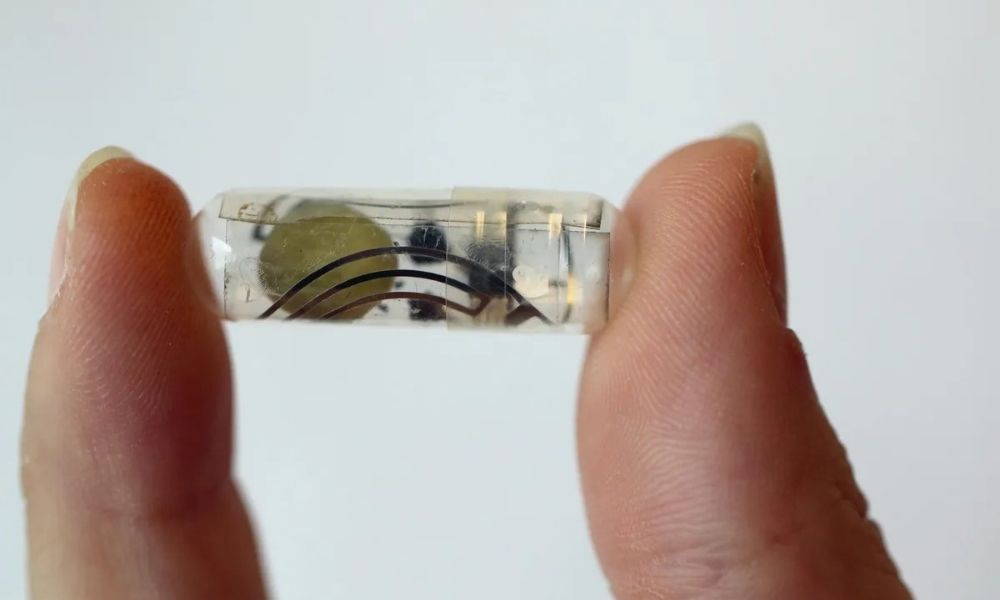
The development of a new bioresorbable battery could open up new possibilities for ingestible medical devices, providing power from materials designed to break down and be absorbed by the body.
Researchers at the Massachusetts Institute of Technology (MIT) and collaborators have developed a magnesium-molybdenum trioxide battery using a paper-like structure that can power small electronic devices inside the gastrointestinal tract. The research was published in Nature Chemical Engineering in September 2026.
Unlike conventional batteries, which can contain materials that may present risks if a device breaks or remains in the body, the new battery has been designed to degrade over time.
The battery uses magnesium and molybdenum trioxide as its electrodes, alongside a biodegradable ionic-liquid electrolyte. Its protective layers include cellulose-based material and natural waxes, including beeswax and candelilla wax, to control how quickly the battery degrades in gastric conditions.
From laboratory concept to animal testing
The researchers first assessed the battery in simulated gastric fluid. The battery began to break down within around two weeks, with complete structural degradation occurring over several months under the study’s test conditions.
The technology was then incorporated into ingestible electronic systems and tested in pigs.
One application used a battery-assisted radio-frequency identification (RFID) system designed to transmit information from inside the gastrointestinal tract. The researchers demonstrated how this could potentially support medication-adherence monitoring.
A second application involved a capsule-based gastric electrical stimulation system. In the animal study, stimulation was associated with an increase in levels of the hormone ghrelin, demonstrating the potential for bioresorbable power sources to support what are sometimes described as ‘electroceutical’ applications.
These results are promising from a technology-development perspective, but they remain an early-stage demonstration. The researchers identify a number of areas requiring further investigation, including shelf life, storage stability, performance over longer periods and how factors such as food intake, gastrointestinal pH, mucus and gut motility could affect degradation and device performance. The stimulation electronics used in the study are also not yet fully biodegradable.
The regulatory challenge
For medical-device developers, this is where the story becomes particularly interesting.
Developing a power source that can safely operate inside the human body is only one part of the challenge. Any future device would need to demonstrate that it performs reliably and safely throughout its intended period of use, while also demonstrating that its degradation products and any resulting biological exposure are acceptable.
The fact that individual materials may be naturally occurring or present in the body does not, by itself, establish the safety of the finished device. The quantities, formulation, degradation rate, location, duration of exposure and interaction between components would all need to be considered as part of a broader biological safety and risk assessment.
This is particularly important for devices intended to remain in the gastrointestinal tract for a defined period, or for technologies designed to deliver electrical stimulation. A predictable degradation profile would be an important part of demonstrating that the device behaves as intended throughout its lifecycle.
The regulatory pathway would also depend on the intended purpose and final device configuration. Under the UK Medical Devices Regulations, classification takes account of factors including intended purpose, duration of use and whether a device is invasive, implantable or active. Powered implants fall within the active implantable medical device framework.
For any future product intended for the UK market, manufacturers would need to demonstrate conformity with the applicable requirements before placing the device on the market, with the appropriate conformity assessment route depending on its classification. Medical devices placed on the Great Britain market must also be registered with the MHRA.
Biological safety will be an important consideration in any eventual clinical development programme. Current MHRA guidance for clinical investigations emphasises the need for a biological safety evaluation before a clinical investigation begins, including assessment of toxicological risks.
And regulation does not end when a device reaches the market. Great Britain’s updated post-market surveillance requirements, applying to devices placed on the market or put into service from June 2025, include requirements relating to incidents and preventive and corrective actions.
An interesting direction for medical-device development
The concept of a battery that can provide sufficient power for an ingestible device before progressively disappearing inside the body is an intriguing development.
The MIT-led study demonstrates that bioresorbable batteries can support more than a simple proof of concept, with the technology being used for both wireless tracking and gastric electrical stimulation in animal models. However, significant development and validation will be required before such systems could be considered for routine human use.
For manufacturers developing innovative ingestible, implantable or other advanced medical devices, the regulatory considerations need to be built into development from the outset.
Material selection, biological safety, performance, degradation, risk management, clinical evidence and post-market surveillance all form part of the pathway from promising research to a device that can be used safely in patients.
As bioresorbable and transient electronics continue to develop, regulatory strategy will be just as important as the underlying engineering in determining how successfully these technologies can move from the laboratory towards clinical application.
Back to News + Insights