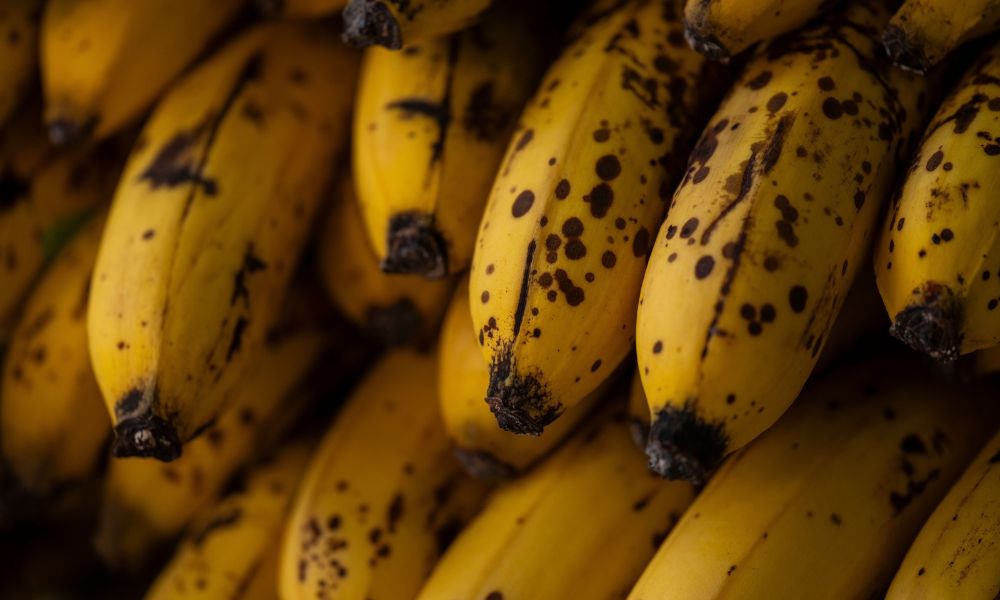
A banana that does not turn brown may sound like a relatively minor scientific curiosity. But the prospect of gene-edited bananas reaching UK supermarket shelves raises a much bigger question: just because we can modify a food, does that mean we should?
Developed by Norwich-based Tropic Biosciences, the new banana has been gene-edited using CRISPR-Cas9 to alter three genes involved in the fruit’s browning process. The changes reduce production of polyphenol oxidase, the enzyme responsible for the familiar discolouration that occurs when a banana is cut, bruised or exposed to air.
The claimed benefits are straightforward. Tropic says the banana can remain fresh-looking for an extra day or two, and longer when refrigerated. The company argues that this could reduce food waste and make bananas more suitable for products such as pre-packed fruit salads and breakfast pots. Around 1.4 million edible bananas are estimated to be discarded every day in the UK.
On the face of it, reducing food waste is difficult to argue against.
But this is also where the regulatory and ethical discussion becomes more interesting.
When does modification become justified?
Gene editing is increasingly being presented as a precise way of addressing challenges in agriculture. Unlike traditional genetic modification, the technology used here does not introduce DNA from another species. Instead, existing genes are deliberately altered to produce a particular characteristic. The UK’s precision-breeding framework distinguishes these products from genetically modified organisms, and Defra has recognised Tropic’s banana as precision-bred.
That distinction is important, but it does not remove the need for careful scrutiny.
The purpose of the modification matters too.
There is an obvious difference between developing a crop with improved resistance to a serious plant disease, greater resilience to climate pressures or characteristics that could contribute to food security, and modifying a fruit primarily so that it remains visually appealing for longer.
The non-browning banana may have genuine benefits. Reducing waste across the supply chain could have environmental and commercial value, particularly if less fruit is rejected because of bruising or appearance. But it is reasonable to ask how significant those benefits will be in practice – and whether they outweigh the need to intervene genetically in the first place.
Looking beyond the headline
There is also a wider issue around how consumers perceive food modification.
A banana turning brown is a natural process and does not necessarily mean that the fruit is unsafe or inedible. Yet changing that characteristic could potentially reinforce the expectation that food should remain visually perfect for longer.
That raises questions about whether technology is addressing food waste at source, or whether it risks accommodating consumer and retail expectations around appearance.
There are also questions around what happens beyond the immediate characteristic being targeted. Gene editing can be highly precise, but precision does not mean that regulatory assessment becomes unnecessary. Any change to a living organism needs to be considered in the context of the resulting food, including its safety and characteristics, rather than simply the technique used to create it.
Regulation still has a role to play
The UK regulatory framework is evolving alongside the technology.
Although Defra has confirmed the banana’s precision-bred status, the fruit still requires authorisation from the Food Standards Agency before it can be placed on the UK market. If approved, it could become one of the most visible examples of precision-bred food available to British consumers.
That process is important because innovation and regulation should not be viewed as opposing forces.
The challenge for regulators is to enable potentially valuable scientific advances while ensuring that claims are properly supported and that products entering the food chain have been appropriately assessed.
And perhaps that is the most interesting aspect of the non-browning banana.
The science itself is impressive. The question is whether the application represents a proportionate and worthwhile use of that science.
As gene editing becomes increasingly capable of changing the food we grow and eat, those questions are likely to become much more common – and the regulatory frameworks governing them will need to keep pace.
The conversation also raises another interesting point. Polyphenols are naturally occurring compounds with important roles in plants and potential benefits for human health. Our next blog will take a closer look at polyphenols, why they matter and what we know about their role in our health.
Back to News + Insights