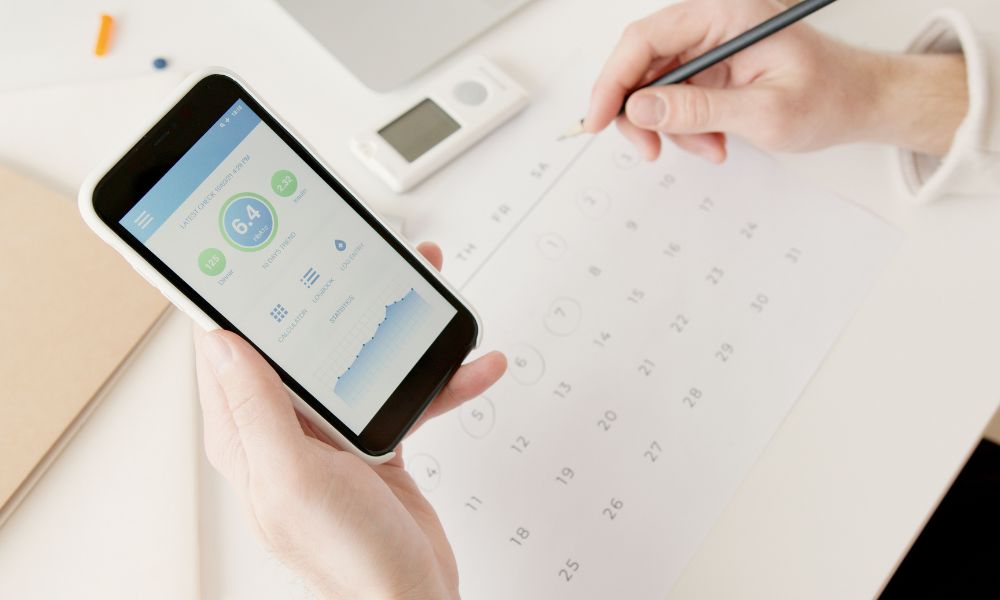
For many people, checking their health has become almost as routine as checking the weather.
Before breakfast, a smartwatch might provide a sleep score, resting heart rate or blood oxygen reading. By the end of the day, users can check their steps, activity levels, stress scores or even an estimate of their biological age.
Health measurements that once required a visit to a healthcare professional can increasingly be carried out at home using wearable technology, smartphone applications and self-testing kits.
And this trend is unlikely to slow down.
Research published in 2026, based on a survey of more than 4,000 UK adults, found that 79% already monitor at least one aspect of their health or wellbeing, while 86% said they would be willing to do so if recommended by the NHS.
For healthcare systems under increasing pressure, the potential is considerable. The UK’s ambition to shift healthcare towards prevention, digital services and care closer to home means self-monitoring could become an increasingly important part of how patients interact with healthcare.
But as more health data moves from the clinic into the home, an important question needs to be addressed: how reliable, meaningful and actionable is the information being generated?
From monitoring to meaningful data
Blood pressure was the most commonly monitored health measure among respondents, followed by fitness and exercise. Most people who had monitored their health reported trusting the results, particularly for measures such as blood pressure and blood glucose.
There is also considerable appetite for greater integration with healthcare services, with more than three-quarters saying they would be willing for their results to be sent automatically to their GP.
This could offer significant benefits. Regular monitoring may help people identify changes earlier, understand their health and make lifestyle changes. For those living with long-term conditions, remote monitoring could also give healthcare professionals a more continuous picture of a patient’s health.
For the NHS, this could support earlier intervention and help manage increasing demand.
However, collecting more data does not automatically result in better healthcare.
When more information creates more uncertainty
One of the key challenges with self-monitoring is that health data can be difficult to interpret.
A reading can be technically accurate but still be misunderstood. A device may identify a change without explaining whether it is clinically significant, while an inaccurate reading can create unnecessary anxiety or false reassurance.
This is particularly important as consumer health technology becomes increasingly sophisticated.
The research found that anxiety was a recurring concern, with some respondents worried that monitoring could encourage excessive checking or cause them to focus on normal fluctuations.
Perhaps more importantly, identifying a potential problem did not necessarily lead to action. Depending on the health measure being monitored, between 14% and 38% of respondents reported taking no action after identifying a problem or concern.
This highlights an important principle for digital health: monitoring is only useful when it leads to appropriate action.
Patients need to understand what their results mean, when they should seek medical advice and when a result is unlikely to be significant.
Accuracy, validation and regulation
As healthcare becomes increasingly digital, the quality of the underlying technology becomes critical.
Not every consumer device is designed or validated to the same standard, and the distinction between a wellness product and a medical device can be significant.
For manufacturers and developers, this means considering accuracy, performance, safety and intended use alongside functionality and user experience.
For healthcare professionals and patients, the question is simple: can the data be trusted?
As digital health technologies become more closely integrated into clinical pathways, confidence will depend on robust evidence, appropriate validation and clear regulatory oversight.
The opportunity is not simply to generate more health information, but to generate high-quality information that can be understood and acted upon with confidence.
Digital health must work for everyone
There is another challenge: access.
The research found that willingness to self-monitor was lower among men, older adults, people living in more deprived areas and those with lower levels of education.
Successful self-monitoring requires more than access to a device. People need the digital skills to use it and sufficient health literacy to understand what the results mean. Cost can also be a barrier, with only around one-third of respondents saying they would be willing to pay for monitoring equipment or applications.
If home monitoring becomes an increasingly important component of healthcare, there is a risk that those who could benefit most may be least likely to have access to it.
Digital transformation must therefore consider accessibility, affordability and digital health literacy. Technology should provide an additional route into healthcare, rather than creating another barrier.
The future of self-monitoring
The growth of self-monitoring represents an important shift in healthcare. Patients can increasingly collect information about their health outside traditional clinical environments, while healthcare systems are developing ways to use that information remotely.
Used appropriately, this could support prevention, earlier identification of health problems and better management of long-term conditions.
But success will depend on more than increasingly sophisticated devices.
The data must be reliable. Technology must be appropriately validated. Patients need clear guidance on what their results mean, while healthcare professionals need confidence that the information entering clinical pathways is meaningful.
Digital health should complement professional healthcare rather than attempt to replace it.
The future may see more patients monitoring their health at home, but the real measure of progress will not be how much data we can collect.
It will be whether that data can be transformed into trusted, clinically meaningful information that improves outcomes for everyone.
Back to News + Insights